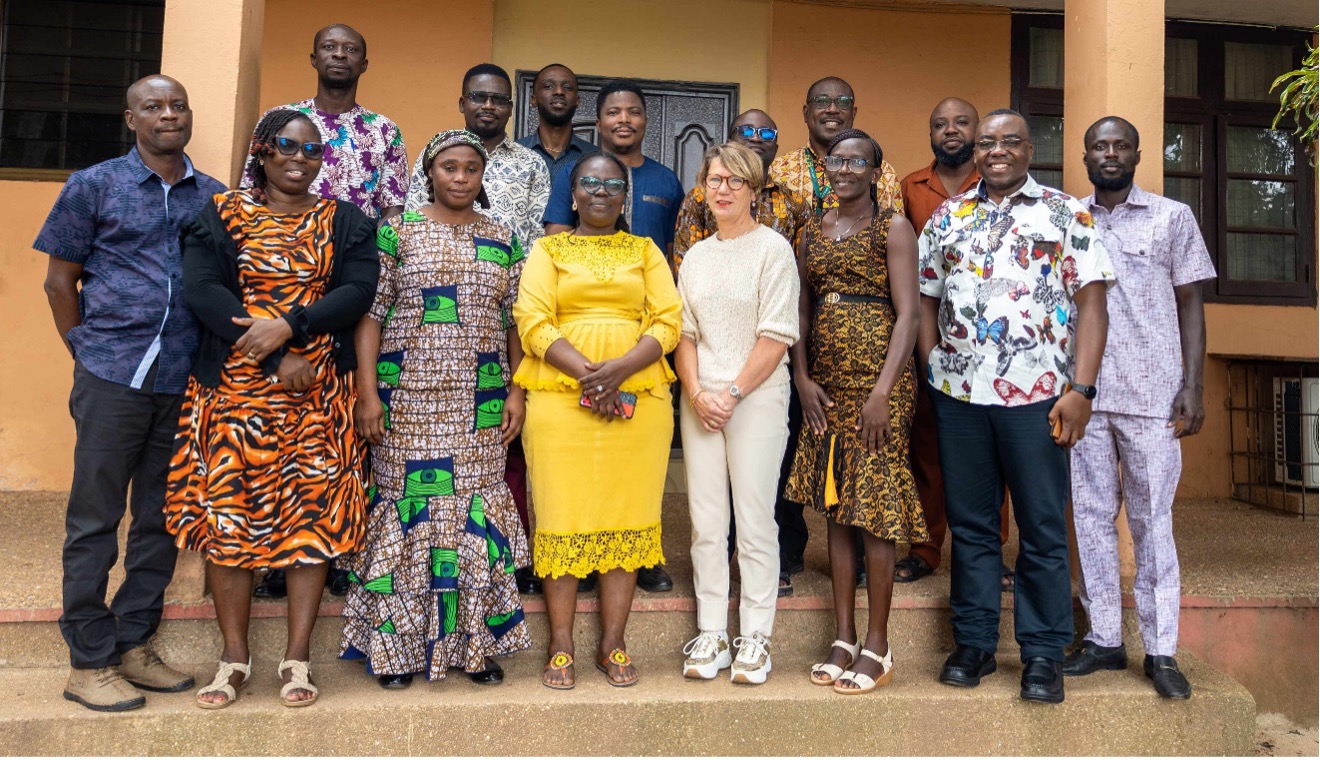
Bunash Farms partners with RAIN to facilitate a training session on Advancing Inclusion and Diversity in Technical and Vocational Education and Training(TVET)
RAIN facilitated a training session on “Advancing Inclusion and Diversity in Technical and Vocational Education and Training(TVET)” as part of the EU Erasmus+ program, “The VET Ecosystems for Employability in Ghana (CB-VET)” for teachers and relevant stakeholders from Kwadaso Agric College (KAC), Adidome Farm Institute (ADFI), Ministry of food and Agriculture (MOFA) and Crop and Soil Research Institute (CSIR). The training was part of a ToT workshop on “Review of existing VET modules, selection occupations for post-production, innovative pedagogies and teaching methods” which were co-facilitated by Bunash Enterprise & Farms and American Farm School respectively at the KAC, Kumasi. The project being funded by European Union brings together a consortium of seven partners:Maastricht School of Management,Kwadaso Agricultural College,CINOP Global,Kwame Nkrumah University of Science and Technology, Kumasi;American Farm School; Bunash Enterprise and Farms andRights and Advocacy Initiatives Network (RAIN). Led by Dr. Betty Adjei and Doreen Asumang-Yeboah, the session was a deep dive into how exclusion, marginalization, and systemic bias can limit participation in ATVET—especially for women, persons with disabilities, and under-resourced learners. Topics included: · Understanding inclusive pedagogy and curriculum design · Addressing gender intersectionality in learning environments · Designing flexible, accessible learning formats (online, modular, or part-time) · Institutional strategies for safeguarding, mentorship, and Recognition of Prior Learning (RPL) Each institution conducted an internal inclusion audit, identifying which groups are being left behind—and how to change that. Participants called for standardized internship protocols, inclusive communication strategies, and safeguards to ensure safe and equitable student experiences across all partner institutions. Key Takeaways: · Inclusion is not just about inviting people into a room; it’s about making sure they are heard, valued, and empowered. · Participants openly shared personal experiences of exclusion—from inaccessible internship placements to unconscious gender bias in fieldwork teams. · Institutions need to rethink infrastructure, curriculum, and policy—from building gender-friendly washrooms to recognizing informal learning pathways through RPL. · There is growing awareness that exclusion can affect any group, and must be addressed with intentionality, strategy, and resources. RAIN is proud to serve as a catalyst in this process, providing platforms for vulnerable voices and ensuring that the future of ATVET in Ghana is one of equity, dignity, and opportunity for all. Inclusion is not a one-time training—it is a strategic commitment that requires planning, investment, and cultural transformation. At RAIN, we are here for that journey.